
Department of the Prime Minister and Cabinet
8 opportunities
Australia
101-1,000 employees
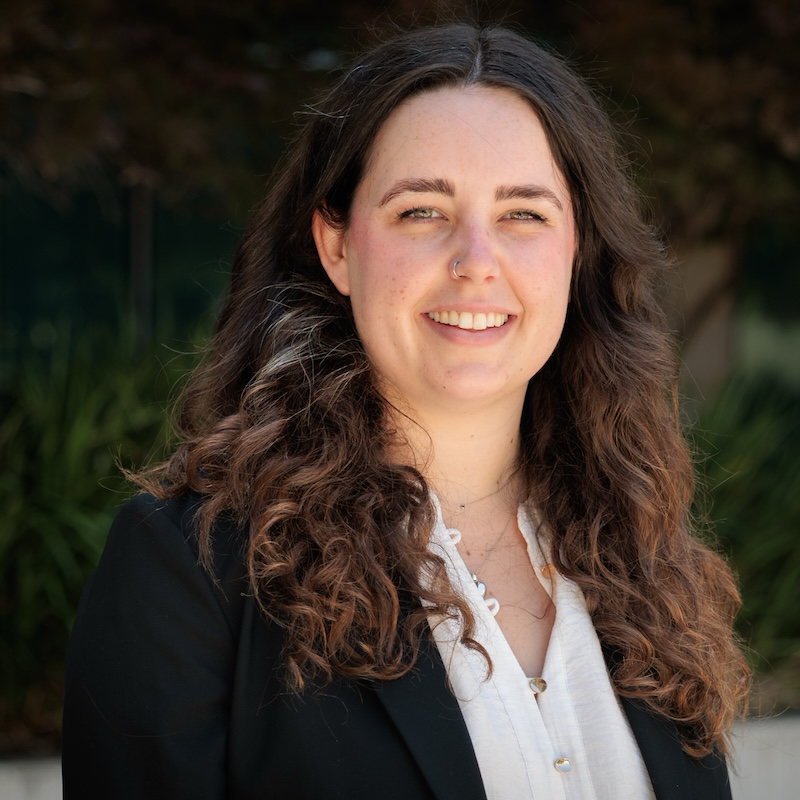
Madeleine Dawkins
Adviser, International Division
Bachelor of International Security Studies
Day in my Life
6.30 am
I’m not usually a morning person but recently I have been waking up early one day a week to make it to the physio before starting work. My favourite thing about life in Canberra is the range of activities available and opportunities to socialise. I was having fun in a social netball team over winter but unfortunately sprained my ankle and now paying the price (via physio fees).
7.30 am
After a successful physio appointment, I begin my bike ride from the north side of Canberra down into Barton. It’s one of my favourite ways to start the day, particularly cycling over the Commonwealth Avenue Bridge and enjoying views of Telstra Tower, Parliament House and other glorious Canberra landmarks. PM&C makes this routine super easy as well, with fantastic end of trip facilities. I have a quick shower and change and then head up to my desk.
8.30 am
My current rotation is in the Southeast Asia team in International Division, where we support the Prime Minister’s engagement with Southeast Asian countries, counterparts and business leaders, and advise on issues which may impact these relationships. It’s the third rotation of my grad year and particularly exciting as I have been able to draw on my academic background in International Security and Asian Studies (and sometimes share funny stories from my time studying in Indonesia).
I started my grad year working in Women’s Safety and Justice, in the Office for Women, an incredibly important area of work within the department which directly supports the Minister for Women, and coordinates policy relating to gender-based violence and the justice system across the whole of the Australian Government. My second rotation was working on Housing and Agriculture policy in the Domestic Policy Submissions team in the Cabinet Division, a fun but very fast-paced team which supports various departments and agencies in their domestic policy submissions to the Cabinet and its committees., This rotation gave me a rapid introduction to the Cabinet process and the integral role the Division plays in facilitating core government decision making.
9.00 am
Today is a big day for my team as we intently watch the Prime Minister welcoming Indonesian President Prabowo Subianto to Sydney. This visit is one we have been working hard on, preparing briefings for the Prime Minister, and comes just after a particular busy period supporting the Prime Minister in his visit to the ASEAN Summits in Malaysia. I feel particularly lucky as a grad to be involved in what we endearingly call the “Summit Season” in the Department.
I start my day by catching up on any emails and tasking from the night before. While my team supports the Prime Minister during international visits with foreign leaders, we also work on a number of domestic projects. Today, my focus is on Senate Estimates briefings, Critical Minerals consultations and working on next steps for government investments in the Southeast Asian region, which my team is monitoring.
10.00 am
I take a short break to catch up for coffee with a colleague from another part of the department. We take a walk across to the Barton shops, which has plenty of food and coffee offerings (and even an IGA).
10.30 am
I settle back into one of my core tasks for the day, preparing the Senate Estimates briefings, while also keeping half an ear on the news to catch any live broadcasting of the Indonesian visit. Senate Estimates are regular meetings held within the Parliament House, where Senators can question how the government spends taxpayer money. During these sessions, unseen questions are asked by Senators to Government Ministers, supported by the Senior Executive Staff of their respective departments. It is the department’s task to prepare briefings for their senior staff, which can cover a range of topics from new policies, international travel, staffing changes, global events, and media stories.
1.00 pm
At lunchtime, I head outside to the sunny courtyard and catch up with some other friends in the grad program.
1.30 pm
Once again back to working on my patch in the team. I make a short phone call to a DFAT colleague to gain a deeper perspective on a quickly evolving area of work – another core PM&C skill to simply “pick up the phone” if you want fast intel!
2.00 pm
I take another break from my computer for a divisional meeting. It’s always interesting to hear the work that goes on outside of my branch and hear about where the Prime Minister might be heading next for upcoming bilateral engagements.
2.30 pm
After our divisional meeting, our team gathers around the TV to watch the Prime Minister deliver a joint press conference with President Prabowo. Once again, it feels like a small thrill to see your work come to life in the public sphere.
3.30 pm
As the press conference wraps up, I turn my attention to the remainder of my tasks for the day and any emails I need to catch up on. I’m also part of the PM&C Social Club and will often turn my attention to any of these tasks in the afternoon. As part of the social club, I am co-organising the PM&C Family Christmas Party which is held annually at The Lodge. I also help to coordinate PM&C’s Snack Shack alongside 3 other grads.
5.45 pm
I bid farewell to my team and head downstairs to get ready for my bike ride home. After a particularly intense work day, it feels refreshing to cycle home (and pass-by lines of traffic)!
6.30 pm
Once I make it home I tend to my burgeoning passion which is my summer vegetable patch and take my house dog, Georgie, for a walk up to our local park. I live close to a Canberra institution, Gang Gang, and I love heading over in the evening to give the dog a spin and soak up the local vibes.
8.00 pm
Over dinner, my housemates and I catch up on the latest episode of Love Island. It’s a fun exercise in learning a new vocabulary and developing psycho-social relationships.
10.00 pm
I start to wind down for the day, pick an outfit to help my morning self, and jump into bed!

Elise Connor
Bachelor of Nursing
As a university student, it is quite an ordeal thinking about where you want to end up in your professional career. Some degrees are far more streamlined, whereas others have flexibility with what career path you take. If you are confused or unsure about where you might want to end up, this is my advice to you.
I studied a Bachelor of Nursing from the University of Queensland. I loved this degree as I got a wide range of clinical experience while dipping my toes into public health policy. Now I know you may be sitting there thinking ‘How did she go from a Nursing degree to public policy at PM&C?’ - That is a great question, let me tell you.
PM&C is an incredible place to work. Studied maritime science? Fantastic. Studied economics and law? Also fantastic. PM&C is trying to find the most versatile graduates, graduates that can provide new insight to policy due to their unique experiences. They want to know if you can transfer the skills learnt from your degree into practical work. I have used most, if not all, of my soft skills from my Nursing degree. Critical thinking, compassion, diligence, these are all skills I have applied to my roles within the Department. Basically, if you don’t think your degree is relevant – it is.
It is okay to be unsure with what you want to do. It is okay to study nursing, or law or even journalism and think ‘Heck I’m really unsure if this is exactly what I want to do’. There are so many paths you can choose, and PM&C truly provides for all backgrounds. I have been able to work on the COVID-19 vaccine rollout, national security policy and in HR. I am still unsure where I will finally land in the Department, but that’s the beauty of it – I am free to choose and I know that my skills will be transferrable and recognised wherever I go.
PM&C is looking to hire you for who you are. If you can write, well that certainly will help, but there is nothing that PM&C expects from you prior to joining the graduate program. And there will be so much that you can bring to the Department – it’s a win win for all. Don’t try sell yourself for something you’re not. The best thing you can be is you, and sing it to your assessors.
This is your sign you’ve been waiting for. I am screaming at you telling you to apply even if you think you don’t fit the ‘criteria’, because I can guarantee the criteria that you think PM&C is looking for is so not it. If you are diligent, hardworking, are willing to give something new ago, then PM&C is for you.

Ju-Hi Jin
Bachelor of Social Work/Law
Hello! My name is Juhi, and I am a 2021 graduate at PM&C. I studied a combined Social Work and Law degree in Sydney, and worked for one year as a social worker and paralegal prior to joining PM&C.
Moving to Canberra was never part of the plan. Subconsciously I believed working at PM&C was not the path for me or a real option within my grasp. I would love to share how this year has joyfully challenged this belief, alongside other preconceptions of full-time work.
1. You don’t need to be a specialist.
Growing up as a child of immigrant parents, I believed I had two career options: lawyer or doctor. I dutifully pursued the former and from the first year of university felt immense pressure to figure out what I’d specialise in. This stemmed from the belief that my twenties were a time to narrow down and develop mastery, requiring careful and deliberate steps towards a career. Not becoming a lawyer is one of the best things that has ever happened to me.
Policy is really fun. I feared it’d be tedious and dry, rearranging numbered paragraphs in long documents. Instead, I have found policy to be fast-paced, varied and all about responding to societal needs. I get the best of both worlds from my degrees – the people focus of social work and the critical problem-solving of law. I have also learned there is a word for people with short attention spans who are interested in lots of topics – generalist.
2. You don’t need to be a political whiz.
A large reason why PM&C felt so foreign was that I didn’t identify with the image of a public servant in my head. Someone confident and articulate, who is always on top of politics and reads The Economist for fun.
My parents own a restaurant and didn’t go to university. I didn’t grow up discussing politics around the dinner table. They wouldn’t be able to identify the Prime Minister.
This year has taught me that you don’t need to be any type of person to work at PM&C. You don’t need to be a debating champion. You don’t need to have studied politics, economics or law. The things that make you feel different are what empower you to analyse policy from a different angle.
3. You do need to be curious and open-minded.
The undoubtable highlight of my graduate year has been the people. Everybody I’ve met at this department are as supportive as they are intelligent and hard-working. I have laughed every day at work.
However, my colleagues are all so different. Not much unites them in background, studies or life experiences. Even my graduate cohort is comprised of unique individuals with degrees ranging from nursing to software engineering. Reflecting on the qualities they share, they are curious, committed and kind.
Although this does not mean much coming from a stranger on the internet, I wish you good luck on your journey. I know how daunting this process is. This year has taught me that life is not linear and it’s ok if things don’t go to plan. Holding onto rigid expectations may close doors before they’ve even opened. Whether you end up at PM&C or not, everything will be ok.
Katie Wylie
Bachelor of Criminology & Criminal Justice
My experience as someone who wasn’t very aware of politics and Government in General
When I first started applying for graduate programs in Canberra, I was concerned that I wouldn’t know enough about Government or politics to either get the role, or to be able to perform well in it. I had never paid much attention to local or federal Government, and coming from a background in social sciences, I didn’t have the same exposure that my Political Science or International Relations friends did.
As I started to apply for jobs, I made sure to figure out what areas I was interested in and had a genuine passion for. I paid attention to the areas of focus and recent work that different Departments had completed to narrow down where I would apply, and found that this research also helped during the application process (especially when completing writing tasks).
When I started at Prime Minister and Cabinet (PM&C), I realised that people in the Department had a wide range of knowledge regarding Government processes and politics in general. I found it reassuring that not everyone was an expert, and you are still able to complete high quality work and participate in work conversations without feeling left behind.
As we went through the year, both the Entry Level Programs team and the rotations that I went through were really invested in my learning and development. As a Grad, you’re given a lot of opportunities to attend training sessions, and this really fast-tracks your learning. I’ve started to listen, read and watch more content related to Government and now that I’m dealing with these topics on a daily basis, it’s easier to understand and be invested in what’s going on.
While there is an advantage to people who have completed relevant degrees or who keep up to date with Government, this job is about so much more than what you know about Government or politics. It’s the skills and experience you have from past jobs and completing a university degree, it’s the passion you have for the areas that you care about, and it’s becoming immersed in work or conversations and realising you have a genuine curiosity to learn more.
I’m really glad that I did apply to these programs – I’ve used elements of my degree and past work experience to succeed within the program, and I’ve gotten some amazing experiences already (contributing to a speech the PM gave, working on the COVID-19 Health Response, and writing briefs for the Secretary). I would highly recommend anyone from any degree and with any amount of previous work experience to apply – your value add to the Department isn’t what you know, but what you can do.
Madeleine Dawkins
Day in my Life
6.30 am
I’m not usually a morning person but recently I have been waking up early one day a week to make it to the physio before starting work. My favourite thing about life in Canberra is the range of activities available and opportunities to socialise. I was having fun in a social netball team over winter but unfortunately sprained my ankle and now paying the price (via physio fees).
7.30 am
After a successful physio appointment, I begin my bike ride from the north side of Canberra down into Barton. It’s one of my favourite ways to start the day, particularly cycling over the Commonwealth Avenue Bridge and enjoying views of Telstra Tower, Parliament House and other glorious Canberra landmarks. PM&C makes this routine super easy as well, with fantastic end of trip facilities. I have a quick shower and change and then head up to my desk.
8.30 am
My current rotation is in the Southeast Asia team in International Division, where we support the Prime Minister’s engagement with Southeast Asian countries, counterparts and business leaders, and advise on issues which may impact these relationships. It’s the third rotation of my grad year and particularly exciting as I have been able to draw on my academic background in International Security and Asian Studies (and sometimes share funny stories from my time studying in Indonesia).
I started my grad year working in Women’s Safety and Justice, in the Office for Women, an incredibly important area of work within the department which directly supports the Minister for Women, and coordinates policy relating to gender-based violence and the justice system across the whole of the Australian Government. My second rotation was working on Housing and Agriculture policy in the Domestic Policy Submissions team in the Cabinet Division, a fun but very fast-paced team which supports various departments and agencies in their domestic policy submissions to the Cabinet and its committees., This rotation gave me a rapid introduction to the Cabinet process and the integral role the Division plays in facilitating core government decision making.
9.00 am
Today is a big day for my team as we intently watch the Prime Minister welcoming Indonesian President Prabowo Subianto to Sydney. This visit is one we have been working hard on, preparing briefings for the Prime Minister, and comes just after a particular busy period supporting the Prime Minister in his visit to the ASEAN Summits in Malaysia. I feel particularly lucky as a grad to be involved in what we endearingly call the “Summit Season” in the Department.
I start my day by catching up on any emails and tasking from the night before. While my team supports the Prime Minister during international visits with foreign leaders, we also work on a number of domestic projects. Today, my focus is on Senate Estimates briefings, Critical Minerals consultations and working on next steps for government investments in the Southeast Asian region, which my team is monitoring.
10.00 am
I take a short break to catch up for coffee with a colleague from another part of the department. We take a walk across to the Barton shops, which has plenty of food and coffee offerings (and even an IGA).
10.30 am
I settle back into one of my core tasks for the day, preparing the Senate Estimates briefings, while also keeping half an ear on the news to catch any live broadcasting of the Indonesian visit. Senate Estimates are regular meetings held within the Parliament House, where Senators can question how the government spends taxpayer money. During these sessions, unseen questions are asked by Senators to Government Ministers, supported by the Senior Executive Staff of their respective departments. It is the department’s task to prepare briefings for their senior staff, which can cover a range of topics from new policies, international travel, staffing changes, global events, and media stories.
1.00 pm
At lunchtime, I head outside to the sunny courtyard and catch up with some other friends in the grad program.
1.30 pm
Once again back to working on my patch in the team. I make a short phone call to a DFAT colleague to gain a deeper perspective on a quickly evolving area of work – another core PM&C skill to simply “pick up the phone” if you want fast intel!
2.00 pm
I take another break from my computer for a divisional meeting. It’s always interesting to hear the work that goes on outside of my branch and hear about where the Prime Minister might be heading next for upcoming bilateral engagements.
2.30 pm
After our divisional meeting, our team gathers around the TV to watch the Prime Minister deliver a joint press conference with President Prabowo. Once again, it feels like a small thrill to see your work come to life in the public sphere.
3.30 pm
As the press conference wraps up, I turn my attention to the remainder of my tasks for the day and any emails I need to catch up on. I’m also part of the PM&C Social Club and will often turn my attention to any of these tasks in the afternoon. As part of the social club, I am co-organising the PM&C Family Christmas Party which is held annually at The Lodge. I also help to coordinate PM&C’s Snack Shack alongside 3 other grads.
5.45 pm
I bid farewell to my team and head downstairs to get ready for my bike ride home. After a particularly intense work day, it feels refreshing to cycle home (and pass-by lines of traffic)!
6.30 pm
Once I make it home I tend to my burgeoning passion which is my summer vegetable patch and take my house dog, Georgie, for a walk up to our local park. I live close to a Canberra institution, Gang Gang, and I love heading over in the evening to give the dog a spin and soak up the local vibes.
8.00 pm
Over dinner, my housemates and I catch up on the latest episode of Love Island. It’s a fun exercise in learning a new vocabulary and developing psycho-social relationships.
10.00 pm
I start to wind down for the day, pick an outfit to help my morning self, and jump into bed!