
Ashurst
1 opportunity
Australia
5001-10,000 employees

Bronte Campion
Bachelor of Law at The College of Law Australia (2023)
The work I have been given so far has not been limited to tasks that my team knows I can complete, but rather tasks that consistently push me out of my comfort zone.
How did you get to your current job position?
I received my current graduate job through the Ashurst clerkship process. In January 2021 I clerked in the International Projects Group (Energy) team, where I was exposed to a variety of different front-end renewable energy and electricity work. The clerkship process was an invaluable experience both professionally and personally, as I was able to gain practical experience working in a busy team as well as connecting with, and receiving guidance from, those in the office. I was fortunate enough to paralegal after my clerkship and later received an offer to commence my graduate position with Ashurst in March 2023.
How did you choose your specialisation?
As a Graduate, I am currently rotating through the Project Finance team. One of the reasons I chose banking and finance is because it is not an area of law that my university offered any specific units on, however, it interrelates with a variety of other practice groups. As banking and finance are not tied to State legislation, the prospects of working on cross-border matters with international clients were appealing and within my first month, I have already assisted on matters run out of our Singapore office. Project Finance has exceeded my expectations.
What was your interview process like?
My interview with the Counsel (now Partner) and HR was conversational which instantly made me feel more comfortable (as interviews can be quite nerve-racking!). I felt as though both interviewers took the time to consider my cover letter and resume so that the questions related to me personally. The interview felt like a two-way street, allowing me to get to know more about Ashurst's values and collaborative culture, whilst the interviewers gained insight into my skills and experiences.
What are your areas of responsibility as a junior lawyer?
As a junior lawyer, I have been fortunate to work on a range of interesting and challenging legal work, including drafting various finance and security agreements, conducting due diligence enquiries, and preparing presentations. I work closely with all members of the team at all levels from Partner to Associate. The work is exciting and varied, and is providing me with great insight into life as a banking and finance lawyer!
Can you describe a typical workday?
My typical day generally starts by getting a coffee with some of my fellow graduates and reading through my emails. I will then create a daily plan of the work I need to complete (factoring in any meetings or training I need to attend) and start working through that list. No two days are the same, so my daily plan is constantly changing but I enjoy being kept on my toes. At the end of the day, I find it helpful to email myself a summary of where I am at with tasks and any additional steps required so that I don't have to re-familiarise myself the following morning.
What are the career prospects for your job?
My graduate role will provide me with the opportunity to progress within the firm. Ashurst has a clearly defined program to assist graduates and lawyers in understanding what is required in order to progress to the next level, whether that be admission to practice or becoming a Senior Associate or Partner. My current goal is to develop my legal skills from the various practice groups I will rotate through this year. Additionally, there are opportunities to be seconded to different Ashurst offices around the world or to clients.
What do you love the most about your job?
I feel really fortunate to work at a supportive firm and be part of a team who cares about my development. The work I have been given so far has not been limited to tasks that my team knows I can complete, but rather tasks that consistently push me out of my comfort zone.
Which three pieces of advice would you give to a current university student?
- Exposure - seek out as many different opportunities as you can while you are studying. Whether those are university competitions, volunteering placements, or legal experience, you will place yourself in a great position for interviews/clerkships/grad roles with a depth of experience.
- Keep an open mind - law subjects at university and practice differ significantly. Keep an open mind to different areas of law as you may be surprised what interests you.
- Be yourself - don't try to be the kind of person you think a law firm is looking for. What will set you apart from others is showcasing your unique experiences and personality.

Molly Pearse
Lawyer
Bachelor of Laws (Honours) at La Trobe University
What's your job about?
We are a corporate law firm that helps large companies with any of their legal needs. Whether that is helping with a transaction (e.g., a company buying or selling another company), providing advice on a legal issue, or running litigation in the courts, anything legal a big company needs, we help with.
There are a range of specialty areas that you can practice in corporate law. During the graduate program at our firm, you rotate through three of those areas over the course of a year. At the end of the program, you pick one to settle in as your specialty. As a graduate, I've rotated through the Employment law team, the Digital Economy Transactions team (think technology law) and the Real Estate team. Each of these teams are quite different so I've done a really broad range of work in the last year.
To give a snapshot, right now in the Real Estate team, I'm often working on a lot of smaller matters at once. I will usually need to prepare lease renewal and variation documents at some point each week. I've also recently been working on some advice about a commercial tenant who is behind on their rent with one of our senior lawyers. I've spent quite a bit of time working on the purchase of a shopping centre by our client, which was a great matter because I got exposure to every step of that process and had direct involvement with our client and the seller.
What's your background?
I grew up in Sydney where I did all my schooling and my first university degree (Media and Communications). After uni, I worked in the travel industry for almost 5 years, during which time, in 2019, I moved to Melbourne. About 7 months later, Covid hit and I was ultimately made redundant. But I had been looking to change careers anyway, and had always thought about doing law, so it was a bit of a blessing in disguise. As awful as Covid was, it was the kick I needed to make me think about what I really wanted to do.
While I was studying my law degree, I never thought I would want to do corporate law. In my second year of uni I started work at a migration law firm which I really enjoyed, so I thought I would do that. But I was introduced to corporate law by a friend who was a year ahead of me at uni and had recently started a graduate program at another corporate firm, and it got me interested. I started going to events and meeting people from firms. I remember the first interaction I ever had with Ashurst and immediately feeling like this was a place I could see myself working, and from that day on I was determined to work at Ashurst. I was thrilled when I secured a clerkship and later a graduate position. It did feel meant to be!
Could someone with a different background do your job?
Absolutely! One of the things Ashurst really values is diversity of experience. The fact that I have quite a different background to the 'traditional' law student shows that anyone can do this and succeed. Your life experience, however that might look, helps make you a better lawyer, and working in law makes use of many transferable skills learned elsewhere. For example, a big part of being a lawyer is having good communication and organisational skills, which is all stuff you can learn at school and part time jobs. If you can bring those skills along with a positive attitude, a sense of curiosity and a strong work ethic, you can succeed in this job.
What's the coolest thing about your job?
One of the coolest things about working at Ashurst is the types of clients we work for. We work for some of the biggest companies in Australia, companies and brands you probably interact with every day, and it's really interesting to see the 'behind the scenes' of that. It's fascinating to see the amount of legal work and commercial thought that goes into any decision a company makes. It is really satisfying when you solve a problem and find the client the outcome they need. It's really nice to see the direct impact of your work. And it's always cool seeing something I have worked on in the news (which happens quite a lot!).
What are the limitations of your job?
This job can be demanding and is often challenging. Corporate law is rarely a normal 9-to-5 job. There can be long hours at times and it can be stressful. It is important to know how to manage your stress levels and how to communicate with the people around you if things are getting too much.
There can also be pressure knowing that the work we do could have a big impact on individuals' lives, making it extra important that we get things right. But for me that is part of what I enjoy – knowing that something is at stake is what drives me to do the best work I can.
Which three pieces of advice would you give to a current university student?
-
Trust your gut and do what is right for you. Don't worry about what other people are doing or saying. Everyone has their own path - focus on yours and trust that you know what is best for you.
-
Have a positive attitude towards everything you do. If you are being negative about something, it's probably going to work out negatively for you. You'd be surprised the difference a positive attitude makes (and other people will notice it, too).
- Don't underestimate the power and benefit of the skills you have learned outside the law. Sure, it is great to have legal experience, but if you don't, that is ok! Think about the skills you do you have and how they are transferable into the law.
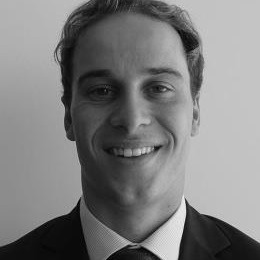
Benjamin Paganin
Juris Doctor at the University of Melbourne (2021)
As a junior lawyer in the Corporate Transactions team, I have the responsibility of drafting a variety of transaction, ASX, ASIC, and FIRB documents, as well as undertaking legal research and due diligence.
How did you get to your current job position?
I applied for a graduate position at Ashurst in July 2020 following my seasonal clerkship in December 2019. Ashurst was generous in offering me a deferred graduate position, which allowed me to extend my degree and travel before I began my career at the firm in February 2022. As part of my graduate program, I undertook practical legal training and was admitted as a solicitor in December 2022. After the 12-month graduate program, I settled as a lawyer in the Corporate Transactions team.
How did you choose your specialisation?
I have always had a keen interest in transactional legal work, and more specifically Corporate/M&A. Before undertaking my postgraduate legal studies I completed an undergraduate in finance and economics, so I was naturally drawn to the kind of services that the Corporate Transactions team offers. That being said, prior to my graduate year I wasn't certain that a career in corporate was for me, particularly as I had limited professional experience in the field. Throughout my graduate year, I rotated through the Corporate Transactions, Project Finance, and International Projects Group (Energy & Resources) practice groups over a 12-month period, which solidified my interest in corporate work.
What was your interview process like?
My interview for the clerkship program was a very positive experience. I was studying in Melbourne at the time and had flown back to Perth for the interview, so I was quite nervous seeing as I had little insight into the Perth interview process from my peers. I was interviewed by a partner in the Corporate Transactions team and a senior associate in the Property & Native Title team, who were both very welcoming. There were a few situational and behavioral questions, but to my surprise, the interview was predominantly a conversation and an opportunity for the firm to get to know me beyond my resume and cover letter, which was unlike other interviews that I had experienced.
What are your areas of responsibility as a junior lawyer?
As a junior lawyer in the Corporate Transactions team, I have the responsibility of drafting a variety of transaction, ASX, ASIC, and FIRB documents, as well as undertaking legal research and due diligence. I am also given opportunities to email clients, manage smaller-scale matters and be involved in pro-bono work.
Can you describe a typical workday?
Other than the usual coffee run in the morning, each day is quite different so it's hard to pinpoint what a typical day's work looks like. However, generally a day might include responding to client queries, assisting my team in progressing matters, legal research, attending meetings and drafting transactional or ancillary documents. Depending on the scale of the matters, some work requires input from multiple teams across different expertise, so a day might also include liaising with those teams, whether that is within the same office, interstate, or occasionally international. The team always has several matters running at once, so it is also very rare for me to work on a single matter each day.
What are the career prospects with your job?
Within the firm, there is the usual career progression of a lawyer to senior associate, counsel or partner. Along that journey, some lawyers move laterally to interstate or international offices or take up secondment opportunities with clients or regulators. Beyond progressing a career at the firm, some lawyers move to in-house counsel at large corporations.
A benefit of being at a leading global law firm is that you receive first-class training and experience in dealing with complex matters. The skills that you develop are highly transferrable and aren't limited to legal roles, so you also tend to see experienced lawyers moving into managerial roles across several industries.
What do you love the most about your job?
One thing that I love about my job is that I am given opportunities as I ask for them, whilst having the support and guidance from experienced and highly skilled lawyers. I am also grateful for being surrounded by highly intelligent and driven people, which motivates me to continue to develop my skills.
Which three pieces of advice would you give to a current university student?
- Be involved in as much as you can and take on opportunities whilst at university, whether it's competitions, career events, exchange programs or co-curricular outside of uni. Whilst it's important to be in tune with your natural strengths and interests, you are at a perfect time in your life to try new things and it's hard to know if you'll enjoy something until you give it a go. There is so much on offer whilst at university, so make the most of it and you'll learn a lot in the process.
- Be invested in whatever you are doing. Throughout your time at the university, you'll be required to do things that don't initially spark your interest and it's easy to only give what is required. The more you invest yourself in the process the more you'll get out of it.
- Always be yourself, particularly when applying for jobs and starting your career. Many fall into the trap of thinking that employers are looking for a particular type of person. You'll spend a lot of time with your colleagues throughout your career, so it's important that you find an environment where you can be yourself.

Sam Odgaard
How did you get to your current job position?
After graduating from QUT with a Bachelor of Information Technology (Information Systems), I kicked off the job search and found a job listing for Ashurst's IT Graduate Program. A few weeks and an interview later, I began working at Ashurst as an IT Intern.
The internship was an excellent experience, providing firsthand practical experience working as a Business Analyst. Throughout the 4 weeks, I was exposed to several areas of IT, providing amazing insight into potential areas of interest moving forward.
Ultimately, I was successful in securing a position in the graduate program as a result of the internship. I then began a series of rotations as the inaugural IT Graduate through the program. Thus far, I have completed 12-week rotations in Service Transition, Cyber Security, and IT Architecture. I am currently in my final rotation within Business Architecture.
Overall, the program has been an amazing experience thus far, and I hope to settle within Business Architecture later this year.
How did you choose your specialisation?
As I mentioned above, I am still undertaking the IT Graduate Program. However, I am confident in my decision to specialise in Business Architecture after settlement. This is due to the vast exposure and firsthand experience I gained while working across IT throughout my rotations.
What was your interview process like?
The interview process was quite straightforward and streamlined. In my case, I progressed from psychometric testing to an in-person interview in around a fortnight. This was an excellent turnaround and was a notable reason I selected Ashurst. The process was transparent, well communicated, and felt genuine throughout.
What are your areas of responsibility as an IT Graduate?
My responsibilities varied significantly between my rotations. For instance, within Service Transition I worked independently to uphold the Service Transition and Knowledge Management BAU (business as usual) activities whilst undertaking significant process redesign work to mature the overall process and documentation.
Within my rotation in Cyber Security, I shifted my focus to vulnerability management, where I leveraged my business process improvement background to formally define the BAU and ad hoc vulnerability remediation processes. I undertook this in parallel with BAU Cyber Security tasks, including threat intelligence and phishing investigations.
As an IT graduate you will be assigned a diverse range of work that is dependent on your skillset and the team that you are rotating through. At a high level, you will likely be assigned a mixture of:
- Project Work. Working within a project team to deliver a solution.
- BAU (business as usual) work. Standard repetitive tasks/work that your team oversees.
- Process Improvement work. Work to improve the internal workflows within/between the team or adjacent teams.
Can you describe a typical workday?
Every day is different. In my calendar, you'll typically find:
- Bi-weekly project/team stand-ups.
- Various recuring meetings (CAB, IT All Hands, etc)
- Weekly and fortnightly catchups with colleagues and managers.
- Project meetings.
- One-off meetings to elicit requirements/approval/information.
- Ad-hoc meetings with team members to collaborate on work.
In conjunction with the calendar items above, I will be working on whatever deliverable takes priority throughout the day.
As most of my work partially or fully revolves around stakeholders located in London or Glasgow, I tend to have most of my meetings in the afternoon and evening. I am happy with that arrangement, as it allows me to start later in the morning.
What are the career prospects with your job?
I believe that Ashurst's graduate program has given me invaluable insights into several IT specialisations that I might consider pursuing in the future. A common phrase that I have heard over the past year is 'a T-shaped person'. It describes someone who has a vast range of knowledge across areas (forming the top of the 'T') and a specialisation (forming the bottom). I believe that I have taken great strides in forming a cross-disciplinary foundation of knowledge, allowing me to freely choose a specialisation moving forward.
As I mentioned previously, I am currently aiming to settle as a Business Architect. However, I would also feel comfortable pursuing Business Analyst, Security Analyst, or Solution Architect roles in the future.
What do you love the most about your job?
The trust. Since joining Ashurst, I have been able to work in a self-managed manner where I feel respected as an equal voice and contributor. When I was initially applying for graduate programs, I expected to be provided menial work with significant oversight and micromanagement. Ashurst has completely defied these expectations, and I love working here as a result.
Which three pieces of advice would you give to a current university student?
If you are a current university student who is reading this article, I think you are already on the right track. It shows that you are:
- Proactively looking for a job before you graduate. Or looking for practical experience while studying.
- Building an understanding of the industry / job landscape.
- Researching the company and role before you apply.
If you stumbled onto this page accidentally, I think the points above are a great place to start. Otherwise, the following advice is for those who are about to start working in the industry after graduating.
- Communication is key. It is integral that you communicate clearly, regularly, and tactfully. It fundamentally enables you to share insights, identify unexplored risks and opportunities, build your personal brand, manage expectations with stakeholders, and work collaboratively. All of the above are critical in the workplace, and even more-so for those in their early careers.
- Don't assume you know nothing. Your fresh perspective can be quite valuable in testing long-standing assumptions and ways of doing things. If something doesn't make sense, make sure you ask the question.
- Don't assume you know everything. Aristotle famously wrote "The more you know, the more you realise you don't know.". I believe it is extremely important to realistically self-evaluate, as it is essential to your development. Make sure you don't feel too dejected if/when you realise how little you know in practise, as it shows that you have already learned something new.